
Applied Philosophy Project
Click here to view and download a pdf of the current version of the book.
I have a deep and abiding interest in the philosophical foundation underlying the content of the Cayce readings. This project provides a scholarly review of the readings' philosophy within a traditional conceptual framework: epistemology, metaphysics, ethics, aesthetics, and logic.
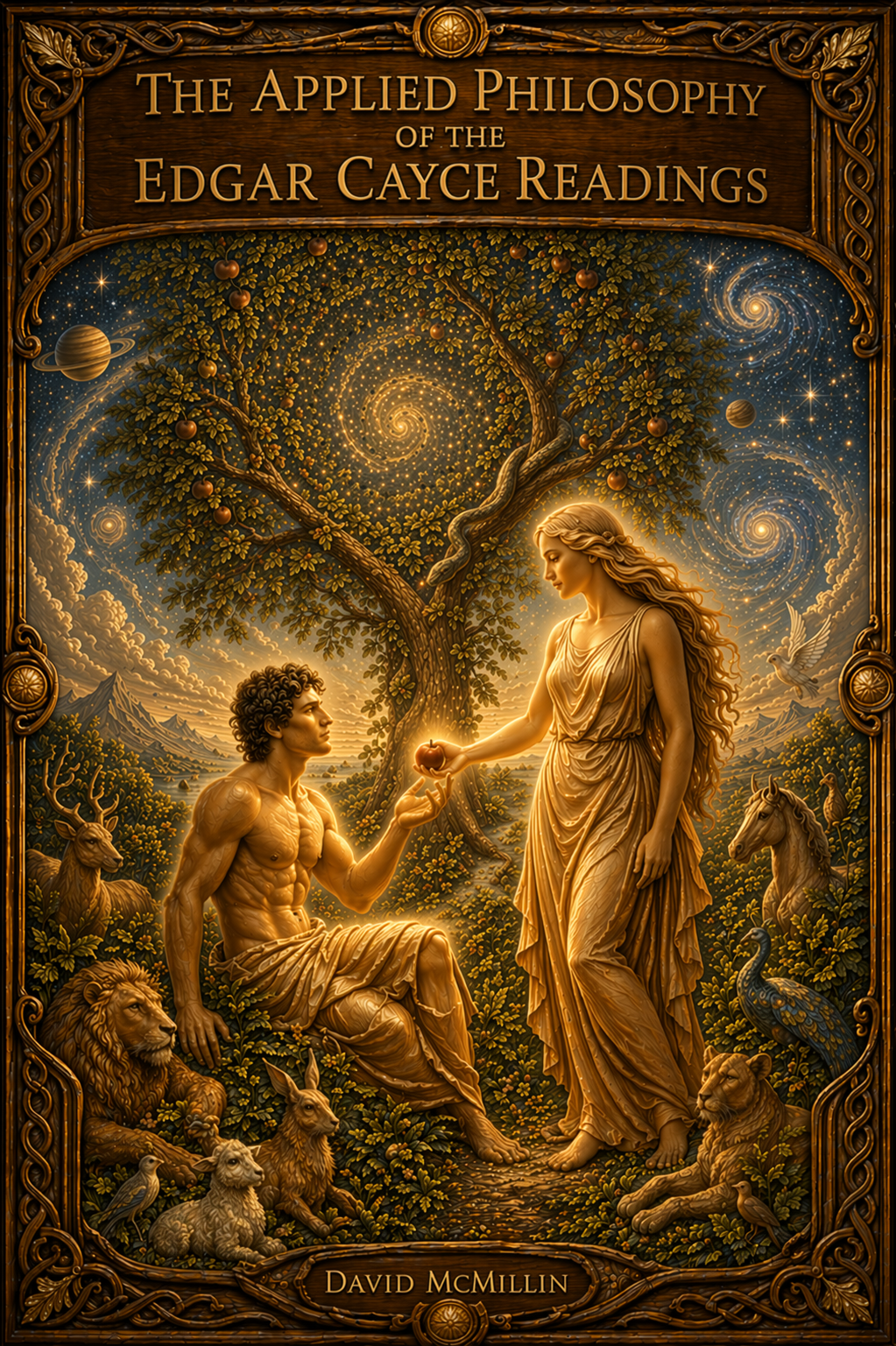
A primary philosophical theme echoed in the readings is the purpose of existence. Specifically when queried on this point the entranced Cayce affirmed that the "reason for creation" was "God's desire for companionship and expression." (5749-14)
Another excerpt loaded with philosophical implications explores the purpose and cause of being:
That it, the entity, may KNOW itself to BE itself and part of the Whole; not the Whole but one WITH the whole; and thus retaining its individuality, knowing itself to be itself yet one with the purposes of the First Cause that called it, the entity, into BEING, into the awareness, into the consciousness of itself. That is the purpose, that is the cause of BEING. (826-11)
From a philosophical perspective, these two brief excerpts provide succinct clues to the reason for creation and purpose (or cause) of being that are explored in the text, namely:
- The nature of the divine (that is capable of and motivated by desire) - a universal concept of God (the Whole) that is both impersonal (First Cause) and personal (companionship);
- Expression, whether creative expression (aesthetics) or the expression of agency (metaphysics of will) as a foundational element of reality;
- Identity (created entities with the potential for individuality and capable of union - i.e., separate yet one);
- Relations between part and whole (mereology) with relevance ranging from Socrates, Plato, and Aristotle to modern systems theory;
- Participatory knowledge via acquaintance (i.e., epistemology of self knowledge/awareness and knowledge of the divine via direct experience) as related to justified belief;
- Conscious awareness as a core aspect of human experience, called into being (not from bottom up emergence in a purely physical manner).
The chapters of the book provide numerous additional selections from the Cayce readings that address the full spectrum of philosophical inquiry. The themes of relationship and expression (as the reason for creation and being) function like the basso continuo of a baroque musical composition - a steady, constant rhythm laying a solid harmonic foundation for the text, driving it forward through the framework of philosophical reflection in each section. A list of video links are provided in the sidebar for a more multimedia experience of the material.